
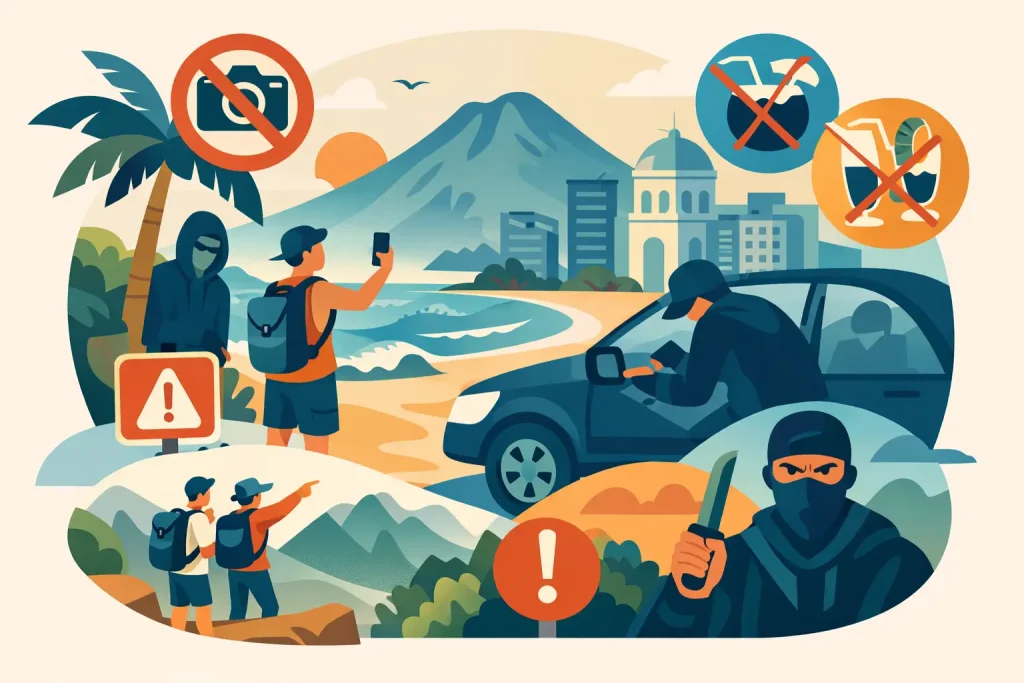
Um ótimo dia em El Salvador pode passar de fácil a estressante rapidamente se você presumir que o país funciona como qualquer outro lugar da América Central. Viajantes que sabem o que não fazer em El Salvador costumam ter uma experiência melhor – não porque o país seja difícil, mas porque as melhores viagens aqui recompensam um pouco de consciência local.
El Salvador é compacto, cênico, e cheio de paradas memoráveis, desde mirantes de vulcões e fazendas de café até cidades coloridas e praias da costa do Pacífico. É também um lugar onde o tempo, transporte, e a orientação local pode fazer uma diferença real. Se você deseja que sua viagem seja tranquila em vez de improvisada, esses são os erros que vale a pena evitar.
O que não fazer em El Salvador antes de chegar
Um dos maiores erros é planejar de maneira muito vaga. Em um mapa, distâncias podem parecer curtas, e tecnicamente eles são. Mas os tempos de viagem dependem do trânsito, condições da estrada, dias de evento, e quantas paradas você deseja encaixar. Uma rota que parece simples pode se tornar apressada se você tentar combinar uma caminhada no vulcão, uma visita à cidade, e uma experiência de café em um dia sem uma programação realista.
Outro problema comum é a falta de embalagem para mudanças de elevação. Muitos visitantes imaginam El Salvador como consistentemente quente e tropical, depois surpreenda-se com áreas montanhosas mais frias e mirantes ventosos. Se seus planos incluem vulcões, lagos, ou cidades de maior altitude, traga camadas leves, sapatos confortáveis para caminhar, protetor solar, e água. O clima pode mudar mais do que os visitantes de primeira viagem esperam.
Também é inteligente não depender inteiramente de pagamentos com cartão. Nas cidades e empresas estabelecidas, cartões são frequentemente aceitos, mas lojas menores, paradas de comida local, e certas áreas rurais podem preferir dinheiro. Você não precisa carregar quantias excessivas, mas chegar sem dinheiro de reserva pode criar inconvenientes desnecessários.
Não presuma que o transporte é simples em todos os lugares
Esta é uma das respostas mais práticas sobre o que não fazer em El Salvador. Não presuma que se locomover será fácil se você não tiver organizado seu transporte com antecedência.
Alugar um carro pode funcionar para alguns viajantes, especialmente aqueles que se sentem confortáveis ao dirigir em padrões de trânsito desconhecidos e navegar em estradas locais. Mas nem sempre é a melhor escolha para todos. Estacionamento, planejamento de rota, sinalização rodoviária, e o tráfego urbano pode adicionar pressão que prejudica a experiência. Se o seu objetivo é aproveitar os lugares em vez de gerenciar a logística o dia todo, transporte guiado ou transferências privadas são muitas vezes a opção mais fácil.
O transporte público é acessível, mas nem sempre é a escolha mais conveniente ou intuitiva para visitantes com tempo limitado. Se você estiver chegando de cruzeiro, por exemplo, cada hora importa. Gastar muito tempo descobrindo o transporte pode significar ver muito menos do que você esperava.
Táxis e aplicativos de carona podem ser úteis em algumas situações, mas eles não são um plano turístico completo. Eles podem te levar de um ponto a outro, no entanto, isso é diferente de ter um dia construído em torno de paradas eficientes, contexto local, e tempo realista.
Não tente conhecer o país inteiro em uma só viagem
El Salvador é pequeno, mas isso não significa que você deva tratá-lo como um destino de lista de verificação. Tentar fazer tudo de uma vez é uma das maneiras mais fáceis de diluir a viagem.
Os visitantes muitas vezes querem praias, vulcões, cidades coloniais, país do café, paradas de comida, e sítios arqueológicos, tudo em poucos dias. O problema não é que seja impossível. O problema é que muito movimento pode te deixar cansado, apressado, e desconectado dos lugares que você veio curtir.
Uma abordagem melhor é agrupar experiências que se encaixem naturalmente. Um vulcão e uma cidade próxima fazem sentido em um dia. Uma rota de café e uma vila de artesãos combinam bem. UMA excursão terrestre saindo de Acajutla deve ser especialmente seletivo, porque você quer tempo suficiente para explorar sem se preocupar com seu horário de retorno.
A compensação é simples. Quanto mais você tenta cobrir, quanto menos profundidade você consegue em cada lugar.
Não ignore a orientação local
Viagens independentes têm seu apelo, mas em El Salvador a visão local agrega valor real. Isto é especialmente verdadeiro se você quiser entender o que está vendo, em vez de apenas passar por isso..
Um ponto de vista panorâmico é mais significativo quando alguém consegue explicar a paisagem, as cidades vizinhas, a tradição cafeeira, ou a história por trás da rota. Uma visita ao mercado torna-se mais fácil quando você sabe o que pedir e o que esperar. Mesmo uma viagem simples de um dia tende a funcionar melhor quando alguém local já definiu o horário, padrões de tráfego, e melhor sequência de paradas.
Isso não significa que todo viajante precise de um guia para cada hora. Isso significa que a escolha de experiências guiadas para dias importantes pode economizar tempo e reduzir a incerteza. Para muitos visitantes, esse equilíbrio cria uma viagem melhor do que fazer tudo de forma independente.
Não trate a segurança como uma reflexão tardia
Os viajantes costumam fazer perguntas amplas sobre segurança, mas a abordagem mais útil é a consciência prática. Não mostre objetos de valor, deixar as malas desacompanhadas, ou passear por áreas desconhecidas sem verificar primeiro os conselhos locais. Esses são hábitos básicos em muitos destinos, e El Salvador não é exceção.
Ao mesmo tempo, não deixe que suposições desatualizadas definam seus planos. Muitos visitantes ficam agradavelmente surpreendidos com o quão acolhedor e agradável o país se sente quando viajam com operadores locais de confiança., usar transporte organizado, e siga rotas bem planejadas.
Há um equilíbrio aqui. O excesso de confiança não ajuda, mas também o medo desnecessário. O planejamento inteligente geralmente é mais importante do que manchetes dramáticas.
Não seja desrespeitoso em cidades pequenas e locais culturais
El Salvador é conhecido pela hospitalidade calorosa, e os viajantes geralmente recebem esse calor de volta quando demonstram cortesia básica. Um erro a evitar é tratar as cidades pequenas como conjuntos de fotos, em vez de comunidades vivas.
Pergunte antes de tirar fotos em close de pessoas. Vista-se adequadamente se for entrar em igrejas ou espaços religiosos. Mantenha o ruído baixo em áreas comunitárias mais silenciosas. Se você parar em uma cidade local para comer ou fazer artesanato, reserve um momento para se envolver com respeito, em vez de correr apenas para tirar fotos.
O mesmo se aplica a locais naturais. Não deixe lixo, ir além das áreas marcadas, ou subestimar as condições da trilha. Vulcões, pontos de vista, e as áreas dos lagos são lindas, mas não são lugares para tratar casualmente. A paisagem merece cuidado, e sua segurança também.
Não pule a comida salvadorenha porque parece simples
Alguns viajantes cometem o erro de comer com muita cautela e perder uma das partes mais agradáveis da viagem. A comida salvadorenha é acessível, reconfortante, e cheio de caráter local. Se você evita experimentar pratos regionais porque parecem muito humildes ou familiares, você perde uma grande parte da experiência.
Pupusas são o exemplo óbvio, mas eles não são os únicos. Frutos do mar frescos na costa, café local nas terras altas, bebidas de frutas, pastelaria, e lanches de mercado adicionam textura a uma viagem. A chave é escolher limpo, lugares respeitáveis e, se você não tiver certeza, pergunte a um guia local onde parar.
A comida é muitas vezes onde os viajantes se sentem mais conectados a um destino. Vale a pena ser curioso.
Não planeje um inglês perfeito em todos os lugares
Muitos profissionais de turismo falam inglês, especialmente em ambientes de viagens organizadas, mas nem todo mundo que você conhece vai. Assumindo uma comunicação perfeita em todos os táxis, parada na estrada, ou loja de bairro pode causar confusão.
Algumas frases básicas em espanhol ajudam, mesmo que sua pronúncia seja imperfeita. Mais importante, paciência ajuda. A maioria das interações vai bem quando os viajantes são educados, fale claramente, e manter as expectativas realistas.
Esta é outra razão pela qual as visitas guiadas e os serviços privados são valiosos para muitos visitantes.. Eles removem o atrito e tornam a experiência mais fácil, especialmente se o seu tempo for limitado.
Não espere até o último minuto para experiências populares
Se houver uma experiência específica que você deseja, como um passeio ao vulcão, passeio de café, ou uma excursão em terra oportuna, não presuma que você sempre pode organizar isso casualmente na chegada. Disponibilidade muda com a temporada, horários de cruzeiro, fins de semana, e feriados.
O planejamento de última hora pode funcionar, mas também pode deixar você com menos opções, decisões apressadas, ou um cronograma que não corresponde ao que você realmente queria. Reservar com antecedência geralmente significa melhor organização, expectativas mais claras, e menos tempo gasto resolvendo detalhes durante sua viagem.
Isso importa ainda mais quando sua visita é curta. Se você está vindo pelo porto ou tem apenas alguns dias no país, cada hora bem planejada conta.
Uma maneira melhor de viajar por El Salvador
A maioria dos erros em El Salvador não são dramáticos. São pequenas escolhas de planejamento que tornam a viagem mais difícil do que o necessário. Tentando fazer muito, subestimando o transporte, ignorando orientação local, ou não se preparar para condições diferentes pode prejudicar o que deveria ser uma tarefa fácil, experiência gratificante.
A boa notícia é que El Salvador é incrivelmente agradável quando abordado da maneira certa. Dê a si mesmo um itinerário realista, fique atento, permanecer flexível, e escolha experiências que permitam que você se concentre no país e não na logística. Se você fizer isso, você gastará menos tempo corrigindo erros e mais tempo apreciando a vista do vulcão, país do café, cenário costeiro, e a recepção gentil que os viajantes lembram muito depois de voltarem para casa.