
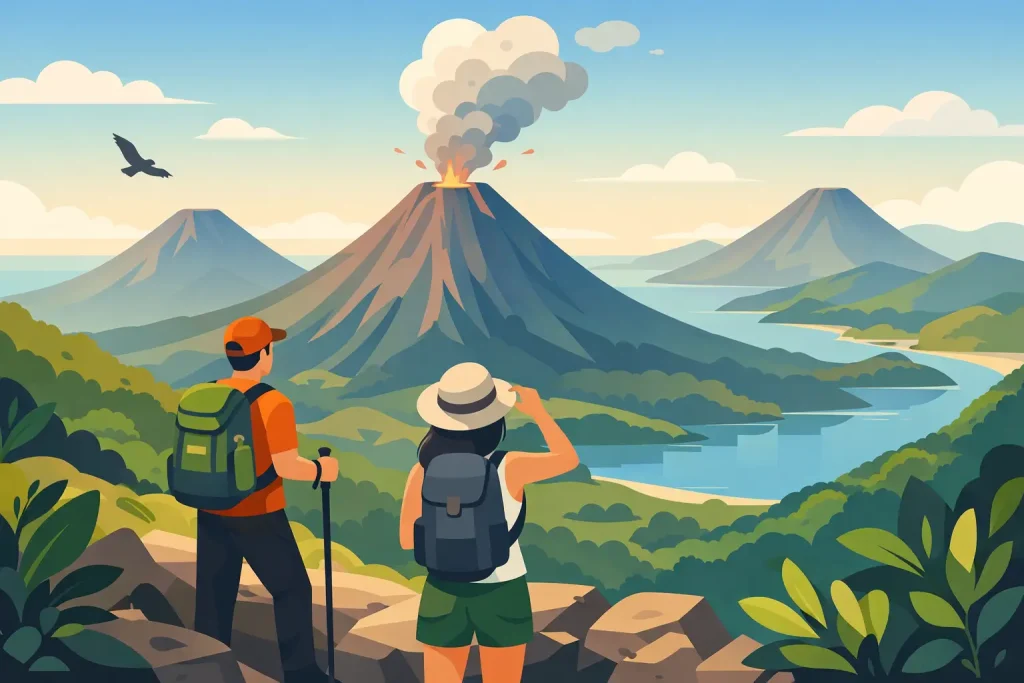
Algunas caminatas te ofrecen una bonita vista al final.. In El Salvador, Las mejores caminatas por volcanes que los viajeros de El Salvador recuerdan tienden a brindarle mucho más. – llantas de cráter, bosques nubosos, campos de lava, y una sensación real de lo dramático que puede ser este pequeño país.. El desafío no es encontrar un volcán. Es elegir el adecuado para tu momento., nivel de condición física, y estilo de viaje.
Ahí es donde ayuda un poco de perspectiva local.. Algunos volcanes son ideales para una excursión de medio día con gran recompensa y esfuerzo manejable.. Otros son mejores para los viajeros que desean una subida más física o un sendero más tranquilo lejos de las paradas más visitadas.. si lo eres construyendo un itinerario y quiero una caminata que valga la pena el día, Estos son los volcanes que la mayoría de los visitantes deberían ver primero..
Las mejores caminatas por los volcanes que los viajeros de El Salvador deben considerar
El Salvador tiene una alta concentración de volcanes en un área relativamente compacta, lo que permite compaginar el senderismo con los pueblos, lagos, regiones cafetaleras, y paradas culturales. Para visitantes, que la conveniencia importa. Puedes tener una experiencia significativa al aire libre sin comprometerte con una caminata remota de varios días.
La mejor elección depende del tipo de día que quieras.. Algunos senderos son conocidos por su accesibilidad y vistas panorámicas.. Otros se destacan porque el paisaje se siente crudo y menos pulido.. Una opción guiada suele ser la forma más sencilla de disfrutar de la experiencia sin preocuparse por la planificación de la ruta., acceso al parque, momento, o transporte.
Volcán Santa Ana – la primera opción clásica
Si solo haces una caminata al volcán en El Salvador, Santa Ana suele ser la favorita. También conocido como Ilamatepec., Es el volcán más alto del país y una de sus escaladas más gratificantes.. El sendero es bien conocido., la ruta esta establecida, y la cumbre ofrece una de las vistas de cráteres más impresionantes de Centroamérica..
La caminata es moderadamente desafiante.. La mayoría de los viajeros con una condición física media pueden hacerlo., pero no es un paseo casual. Espere ganancia de elevación, secciones expuestas, y un constante empujón cuesta arriba. La recompensa es un lago en el cráter con vívidos cambios de color dependiendo de la actividad volcánica y las condiciones de luz., además de vistas hacia el lago Coatepeque y los picos circundantes.
Esta es también una de las caminatas al volcán más fáciles de incluir en una excursión guiada de un día.. Para visitantes que desean una experiencia confiable, eso importa. Momento, clima, y las condiciones del sendero pueden afectar el día., Por lo tanto, ir con apoyo local a menudo hace que la salida sea más tranquila..
Volcán Izalco – para un desafío más fuerte
Izalco tiene una personalidad muy diferente. Es famoso por su oscuridad., laderas escarpadas y su historia como uno de los volcanes más activos de la región. Comparado con Santa Ana, Esta caminata puede resultar más dura bajo los pies y más exigente físicamente., especialmente en sol y viento.
El atractivo aquí es el terreno.. Izalco se ve y se siente volcánico en la forma que muchos viajeros imaginan antes de llegar. – roca suelta, paisajes desolados, y vistas amplias que se sienten casi lunares en algunas partes. Es una buena opción para los excursionistas que desean una subida más aventurera y no les importa un ascenso más duro..
Hay una compensación, aunque. Si estás eligiendo entre Santa Ana e Izalco y solo tienes un día, Santa Ana suele ser la mejor opción para quienes visitan por primera vez. Izalco tiene más sentido si ya sabes que disfrutas de caminatas más difíciles y quieres algo menos indulgente..
Cerro Verde – acceso más fácil, mejor para excursionistas más ligeros
No todos los visitantes quieren un día de cumbre exigente. Cerro Verde es una opción inteligente para los viajeros que desean el entorno del volcán., aire fresco, y vistas panorámicas sin una subida extenuante. La zona es más verde., enfriador, y más relajado, con senderos que son mucho más accesibles para caminantes ocasionales.
Desde Cerro Verde, podrás disfrutar de excelentes miradores hacia Santa Ana e Izalco, y el ambiente del parque es atractivo para parejas., familias, y los viajeros se familiarizan con las actividades al aire libre. También es un complemento práctico para un día de turismo más amplio., especialmente si quieres combinar paisajes con un ritmo cómodo.
Esta es una de las mejores opciones cuando el objetivo no es poner a prueba la resistencia sino experimentar la región volcánica de El Salvador de una manera fácil., manera agradable. También es útil para visitantes de cruceros o viajeros de estadías más cortas que desean la naturaleza sin comprometerse demasiado físicamente.
San Salvador Volcano – cerca de la capital, sorprendentemente conveniente
San Salvador Volcano, a menudo asociado con El Boquerón, es una de las experiencias volcánicas más accesibles del país. Es una buena opción para los viajeros que se alojan en la capital o cerca de ella y desean paisajes espectaculares sin una expedición de un día completo..
El principal atractivo es la impresionante zona del cráter y la comodidad de llegar hasta allí.. Esta no es la caminata al volcán más desafiante del país., pero funciona muy bien para los visitantes que equilibran el tiempo limitado con el deseo de ver un hito natural importante.. El clima más fresco en la elevación es otra ventaja..
Si tu itinerario incluye turismo urbano, museos, o paradas de comida en San Salvador, este volcán encaja naturalmente. Se trata menos de un largo esfuerzo de montaña y más de un fácil acceso a un paisaje volcánico memorable..
Chaparrastique – para excursionistas experimentados y aventureros
Chaparrastique, también conocido como volcán san miguel, es una de las siluetas más impresionantes de El Salvador. Se eleva espectacularmente y atrae a viajeros que desean una experiencia de montaña más seria.. Esta no suele ser la primera recomendación para todos los visitantes., Y es exactamente por eso que atrae al tipo adecuado de excursionista..
Las condiciones aquí pueden ser más exigentes., y el acceso puede variar según la actividad volcánica y la orientación local.. Eso hace que la planificación sea especialmente importante. Para excursionistas experimentados o viajeros que buscan específicamente una excursión al volcán menos típica., Chaparrastique puede ser memorable, pero no es la elección más sencilla.
Este es un buen ejemplo de dónde importan las expectativas.. Si desea comodidad y un flujo de visitantes refinado, Otros volcanes pueden ser más adecuados para ti.. Si quieres sentir una aventura más fuerte y te sientes cómodo con la incertidumbre., Chaparrastique merece atención..
Conchagua Volcano – vistas sobre el Golfo de Fonseca
Conchagua ofrece algo que los volcanes occidentales no ofrecen – vistas panorámicas sobre el Golfo de Fonseca e islas cercanas. La experiencia se siente diferente a las rutas centrales y occidentales más conocidas., y eso lo hace atractivo para los viajeros que exploran el este de El Salvador..
La caminata en sí suele ser menos famosa a nivel internacional., pero el escenario es especial. en un día claro, El panorama costero añade una dimensión completamente diferente al foco habitual de cráteres y montañas.. Puede ser una excelente opción para los visitantes que desean combinar la naturaleza con partes menos transitadas del país..
Porque está más alejado de los circuitos turísticos más habituales., Esta caminata es mejor para viajeros con un itinerario flexible o un interés específico en ver más que los puntos destacados estándar.. Premia ese esfuerzo extra con una experiencia más tranquila..
Volcán San Vicente – escénico, verde, y menos concurrido
Volcán San Vicente, también llamado chinchontepec, tiende a atraer a viajeros que desean una caminata más fuera del radar. Es conocido por sus exuberantes alrededores y una sensación más local en comparación con los principales volcanes del país..
Este no siempre es el volcán más fácil de incluir en una visita corta., pero para viajeros que valoran lugares más tranquilos, puede ser una fuerte adición. El paisaje parece más verde y menos expuesto que algunas de las rutas volcánicas más duras., y el ambiente es a menudo parte del atractivo.
Si tu objetivo es decir que hiciste el volcán más famoso, elige santa ana. Si tu objetivo es experimentar un lado diferente de los paisajes de El Salvador, San Vicente puede ser el mejor partido.
Cómo elegir entre las mejores caminatas a volcanes en El Salvador
Mucho depende de tu tiempo disponible.. Santa Ana y Cerro Verde suelen ser los más fáciles de incluir en un itinerario de visitante clásico porque combinan bien con otros puntos destacados del oeste.. El Volcán San Salvador es práctico si estás radicado en la capital. Conchagua y Chaparrastique tienen más sentido cuando tu viaje llega al oriente.
El nivel de condición física también importa. Los viajeros a veces subestiman las caminatas por los volcanes porque las distancias pueden parecer manejables en el papel.. Elevación, calor, y la superficie del sendero marcan la diferencia. Si quieres un desafío fuerte pero realista., Santa Ana suele ser el punto ideal. Si quieres algo más ligero, Cerro Verde or El Boqueron is a better fit.
Luego está la cuestión de la logística.. Transporte, tiempo de entrada, acceso al sendero, y las condiciones locales pueden complicar lo que parece simple en línea. Para muchos visitantes internacionales, especialmente aquellos con una agenda apretada o que llegan en crucero, La planificación guiada elimina mucha fricción.. Inter Tours El Salvador ayuda a los viajeros a convertir la idea de un volcán en un día oportuno con transporte, orientación local, y una ruta que coincida con el ritmo que realmente quieren.
Qué esperar antes de ir
El clima puede cambiar rápidamente en elevaciones más altas, Por eso vale la pena vestirse con capas ligeras incluso en los días cálidos.. Un buen calzado para caminar es imprescindible.. Agua, proteccion solar, y el momento realista importan más de lo que muchos visitantes primerizos esperan.
También es inteligente pensar más allá de la caminata en sí.. El mejor día en un volcán no suele consistir sólo en llegar a la cima. Se trata de tener suficiente apoyo para disfrutar del viaje., entiende lo que estás viendo, y volver sin estrés. Esto es especialmente cierto en un destino donde el conocimiento local puede ahorrar tiempo y hacer que la experiencia sea más cómoda de principio a fin..
Si estás decidiendo por dónde empezar, Santa Ana es la recomendación más segura para la mayoría de los viajeros., mientras que Cerro Verde y El Boquerón son excelentes si quieres un acceso más fácil.. El volcán adecuado es el que se adapta bien a tu viaje., no solo el que tiene la foto más atrevida. Elige la caminata que te deje con la energía suficiente para seguir descubriendo el resto de El Salvador..